
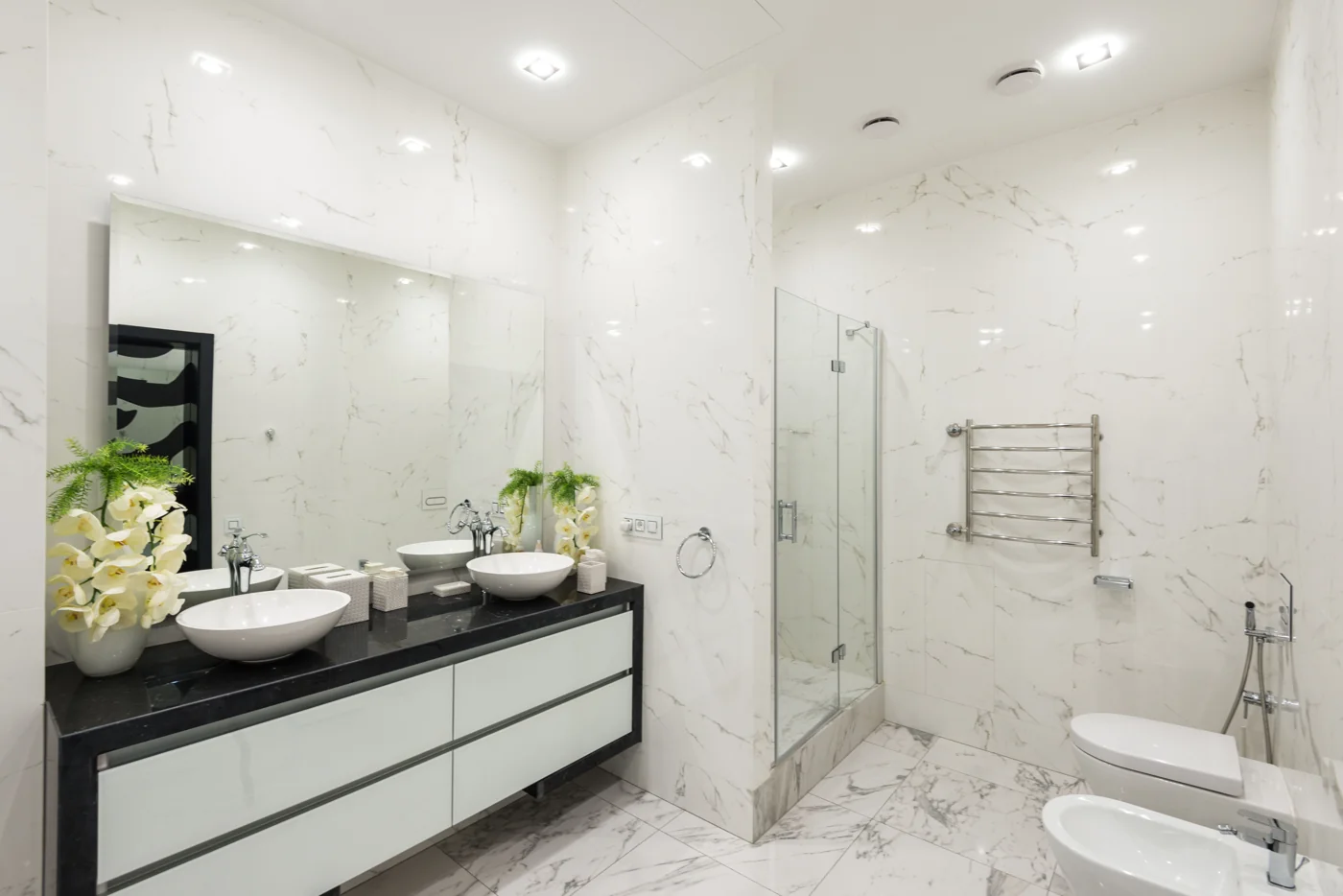
Let the stone’s characteristics guide the selection
Each stone type has different porosity, hardness and visual variation. Marble can have dramatic veining; travertine and limestone often offer softer tonal movement; slate can bring pronounced texture. Granite and stone mosaics introduce other possibilities. View enough samples to understand the range rather than assuming every piece will match a single display tile.
Think about finish, care and moisture
Polished, honed and textured finishes affect the appearance and feel underfoot. Wet-area slip resistance and the manufacturer’s application guidance should be considered before selecting a surface. Some stones can etch from acidic substances or benefit from appropriate sealing. Sealer does not make stone stain-proof or remove the need for compatible cleaning products.
Plan the installation assembly and layout
Natural stone can require specific substrate stiffness, setting materials and preparation. Tile thickness, patterns, grout and transitions all influence the finished floor. Share your city, rooms, approximate square footage and the stone you are considering with Jared. Photos and details about the existing floor help explain the scope of your Orlando or Central Florida project.
Natural stone flooring: common questions
Does all natural stone require the same maintenance?
No. Stone type, finish and the installation environment determine care. Use a cleaning and sealing approach suitable for the exact material.
Can marble be damaged by everyday spills?
Acidic substances can etch some marble finishes, and staining is also possible. Prompt cleanup and appropriate care are important; sealer does not prevent every kind of damage.
Is every stone finish suitable for a bathroom floor?
No. Evaluate slip resistance, water exposure, finish and product guidance. The waterproofing assembly beneath the stone may also be necessary.